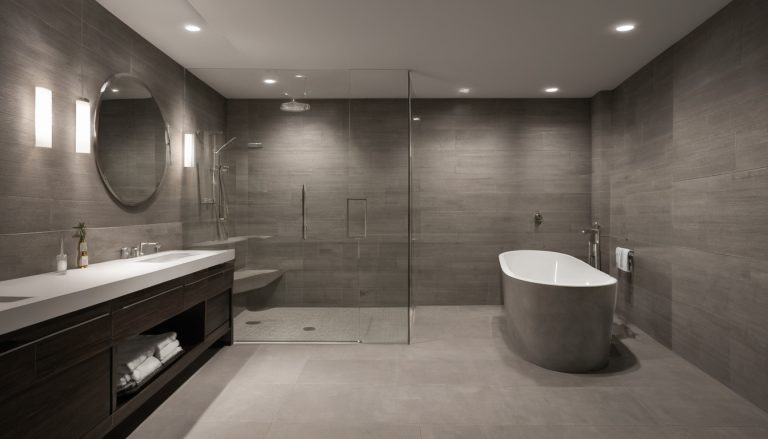
An attractive tile is not approved until its documentation, wet-use evidence, format, substrate demands, drainage compatibility, and cleaning burden pass review. This approval process turns bathroom remodel ideas into a floor that can be installed correctly, maintained without damage, and used safely under the project’s actual conditions.
Which tile specifications should decide whether a bathroom floor is suitable?
A bathroom tile belongs on the shortlist only when its manufacturer documents the intended application, slip test, water-absorption class, grout joint, maintenance limits, and installation method for the project’s wet-use conditions.
| Screening check | Pass condition |
|---|---|
| Application | Approved for the specific interior bathroom floor or shower floor |
| Exposure | Documentation addresses wet barefoot use on a level or sloped surface |
| Installation | Format, grout joint, mortar, substrate, and drainage requirements are feasible |
| Project conditions | Approval fits residential use, local requirements, and any accessibility needs |
| Maintenance | Permitted cleaners and routine care suit the household |
A tile data sheet is more useful than a showroom label
Request the technical data sheet, installation instructions, care guide, warranty, current lot information, and declaration of performance where applicable. Retailer descriptions and terms such as “non-slip” do not override manufacturer documentation. If the documents conflict, obtain written clarification from the manufacturer before ordering.
Bathroom floors and shower floors require separate approvals
Confirm each location independently: general interior floor, splash-prone floor, shower receptor, ramp, accessible route, or submerged surface. Approval for a level bathroom floor does not establish suitability for a sloped, frequently saturated shower floor. Even a listed slip rating needs closer review because a laboratory result does not guarantee safe wet performance.
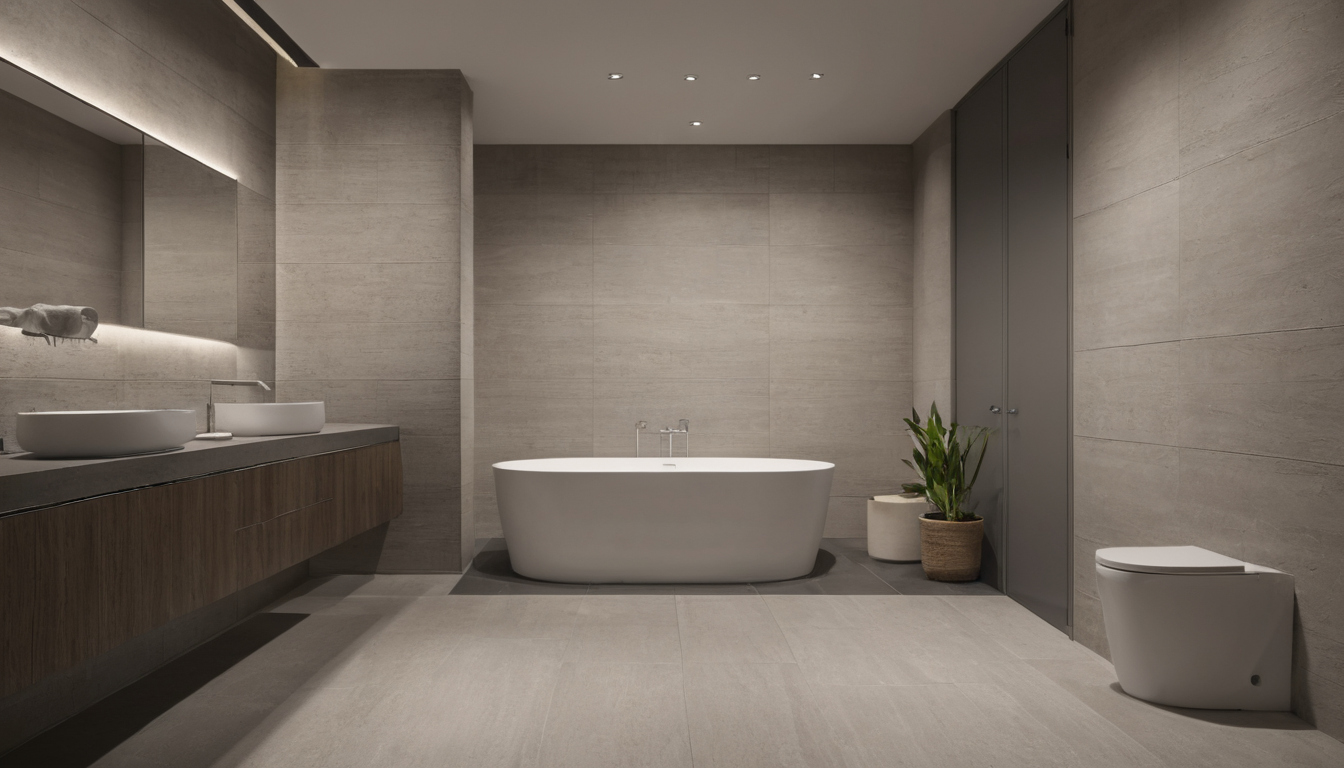
Which tile specifications should decide whether a bathroom floor is suitable shown as an editorial reference for proportion and finish coordination.
A slip rating does not guarantee that bathroom tile will be safe when wet
A reported slip result matters only when the test method, contaminant, footwear or barefoot condition, surface preparation, and use classification match the bathroom. A single DCOF, pendulum, or classification number is not a universal guarantee against falls, particularly on sloped shower floors exposed to soap and standing water.
What does a bathroom tile’s DCOF result actually establish?
A DCOF result describes the friction measured between a specified testing device and a prepared tile sample under defined laboratory conditions. Dynamic coefficient of friction concerns resistance while movement is occurring. The result should not be confused with older static-friction terminology or treated as a prediction of every user’s footing.
For products evaluated under ANSI A326.3, request the full report or current technical data sheet rather than a retailer’s isolated number. Confirm the tested surface finish, wet or dry condition, product-use classification, sample direction, and manufacturer limitations. A classification intended for a level interior floor does not automatically approve the same tile for a sloped shower, ramp, or persistently contaminated surface.
Wet barefoot showers need evidence that matches wet barefoot use
A shower-floor decision requires evidence relevant to wet, barefoot contact. Pendulum, ramp, and DCOF methods use different equipment, contaminants, procedures, and classification systems, so their results are not directly interchangeable. If a supplier publishes only one metric, ask for written confirmation that the exact finish and size are approved for the planned shower application.
Apply greater caution for curb-free showers, polished finishes, children, older adults, and anyone with limited balance or mobility. Installed performance also depends on slope, drain location, lippage, grout joints, and handhold placement. No laboratory rating compensates for puddling or an abrupt level change.
Texture improves traction only when drainage and cleaning remain workable
Texture can support traction, but deep ribs and aggressive relief can retain soap film, body oils, and mineral deposits. Residue may reduce practical grip while making routine cleaning harder. Inspect a physical sample under raking light, wet it, and check whether a normal brush can reach the recesses without harsh chemicals or polishing treatments.
Approve slip suitability only after the test evidence, drainage geometry, and maintenance routine agree. The next check is whether the tile body’s water absorption and durability ratings suit the bathroom use.
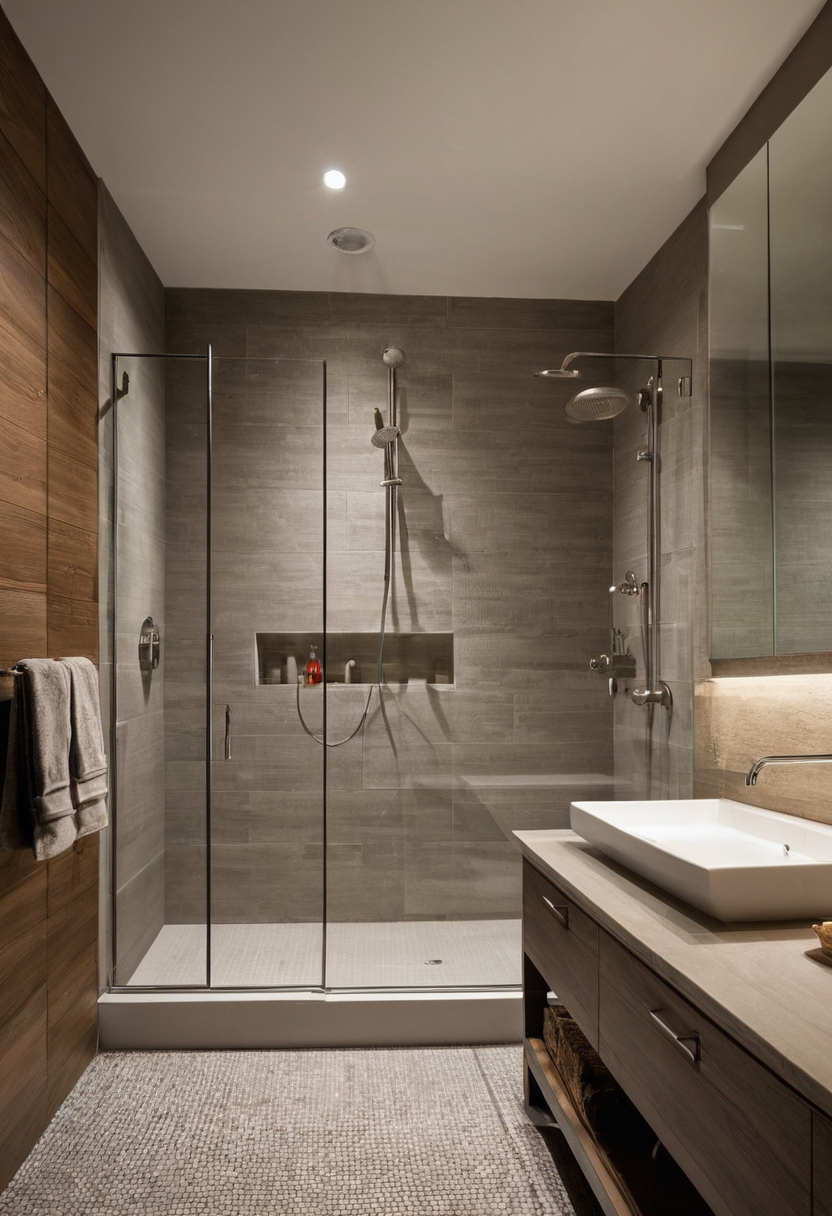
A slip rating does not guarantee that bathroom tile will be safe when wet shown with floor, wall, and fixture relationships visible.
Water absorption and durability ratings must match the tile body and bathroom use
Water absorption classifies the tile body, but it does not prove that a completed bathroom floor is waterproof, slip resistant, or durable under the household’s cleaning routine. Approve the product only after matching its absorption, surface construction, wear data, chemical resistance, and listed applications to the room.
| Specification | What it measures | What it does not establish | When it matters |
|---|---|---|---|
| Water absorption | Water taken into the tested tile body | Waterproofing or wet traction | Tile classification and moisture-sensitive locations |
| Abrasion or wear | Visible wear on glazed surfaces or material loss from unglazed tile | Stain resistance | Mobility equipment, grit, and frequent traffic |
| Stain resistance | Ability to release specified staining agents | Resistance to harsh cleaners | Cosmetics, hair dye, and colored products |
| Chemical resistance | Surface response to specified chemicals | Approval for every household cleaner | Disinfectants, acidic products, and alkaline cleaners |
Porcelain is not automatically the best bathroom tile
ANSI A137.1 classifies porcelain tile by its low water absorption, generally 0.5 percent or less. ASTM C373-18 provides absorption test methods for specified ceramic and glass products, using a vacuum method for pressed tile and a boil method for extruded products under the stated conditions.
- Confirm that the manufacturer lists the exact tile and finish for the intended bathroom or shower floor.
- Compare fabrication risk. Dense porcelain may require more capable cutting, drilling, edge finishing, and mortar application.
- Keep suitable ceramic tile in consideration for conditioned interior bathroom floors when its application approval, surface durability, installation system, and budget fit the project.
- Request separate confirmation for freeze-thaw exposure if the bathroom can experience exterior temperature extremes.
Abrasion, staining, and chemical ratings answer different maintenance questions
Glazed tile needs surface-wear evidence because decoration can wear before the body fails. Unglazed or through-body products need relevant deep-abrasion data, while stain and chemical tests address different exposures. Check the maintenance sheet against hair dye, cosmetics, disinfectants, acids, bleach-based products, abrasives, and solvents actually used. Increase ventilation when using products that emit volatile organic compounds indoors, as the U.S. Environmental Protection Agency recommends.
After the tile body passes review, tile size, grout joints, and drainage geometry determine whether installers can build the floor correctly.
Tile size, grout joints, and drainage geometry determine whether the floor can be installed correctly
Tile format must follow floor geometry rather than trend. Large units reduce grout lines on a level bathroom floor, but shower slopes, drain type, tile warpage, substrate flatness, and lippage limits may require smaller units, envelope cuts, or another layout. Rectified edges do not eliminate grout or movement joints.
Large-format tile increases substrate and layout demands
Large-format tile magnifies small variations in the substrate and tile body. The installer should inspect floor flatness and sample tile warpage before approving the pattern. Mortar coverage, back-buttering, handling, cutting equipment, substrate correction, and waste can make fewer grout joints more expensive rather than less.
Rectangular tile also needs a dry layout. A one-third offset is commonly recommended for bowed planks because a half-offset can place high tile edges beside lower centers, increasing perceived lippage. The tile manufacturer’s written offset instructions supersede a general showroom rule.
Shower drain placement controls practical tile size
| Floor condition | Practical format issue |
|---|---|
| Point drain | Four-way drainage planes often favor mosaics or carefully planned envelope cuts. |
| Linear drain | A single-plane fall may accept larger tile if drain placement and edge transitions are coordinated. |
| Curbless shower | Slope, door movement, waterproofing limits, and the bathroom-floor transition must be resolved together. |
| Level bathroom floor | Larger units remain dependent on substrate flatness and acceptable finished lippage. |
The locally adopted code determines required drainage falls and transition conditions. Review those requirements alongside small-bathroom clearances and wet-zone limits before ordering tile.
Grout-joint width must accommodate tile variation and movement
Grout-joint width should reflect measured dimensional variation, edge condition, pattern, and the manufacturer’s minimum recommendation. Mosaic sheets also need inspection because uneven spacing between sheets can remain visible after grouting. Grout joints separate tiles. Flexible perimeter, transition, change-of-plane, and field joints accommodate assembly movement and must not be filled as ordinary grout joints.
Format approval therefore remains provisional until the substrate, waterproofing system, and movement-joint plan are documented.
The substrate, waterproofing system, and movement joints matter more than the tile’s water resistance
A low-absorption tile cannot protect a bathroom built over a moving, uneven, or inadequately waterproofed substrate. Before ordering tile, verify the substrate, flatness, cracks, moisture, floor height, membrane compatibility, penetrations, and movement-joint locations against current installation standards and locally adopted code.
Water-resistant tile is not a waterproof floor assembly
The waterproofing system must manage seams, corners, penetrations, transitions, and the drain connection. Specify one compatible assembly, including mortar, grout, backer, membrane, sealant, and accessories. Follow its cure and flood-testing instructions rather than combining products without written approval.
Existing floor conditions should be investigated before tile is ordered
| Existing condition | Primary installation risk | Required check |
|---|---|---|
| Concrete slab | Cracks, moisture, contamination | Test and repair before selecting the setting system |
| Framed wood or upper story | Deflection and floor buildup | Confirm structure, underlayment, and threshold height |
| Existing tile or heated floor | Weak bond or incompatible layers | Verify adhesion, flatness, heat-system requirements, and warranty |
Damp materials should generally be dried within 24 to 48 hours after correcting the moisture source, according to EPA moisture guidance. Extensive mold, sewage exposure, HVAC contamination, or concealed damage warrants specialist assessment.
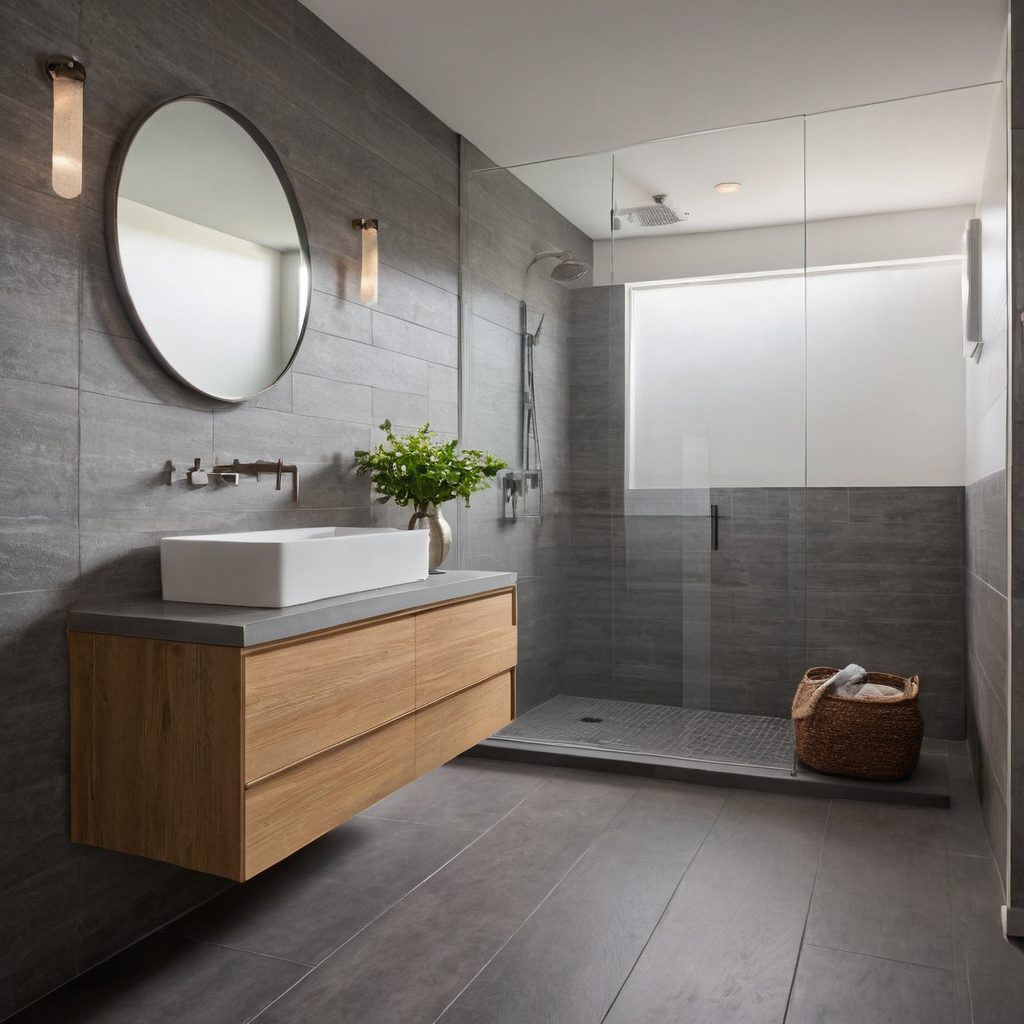
The substrate, waterproofing system, and movement joints matter more than the tile’s water resistance shown as a planning reference for layout, scale, and material decisions.
Bathroom flooring decisions must follow the remodel sequence
Approve the layout and the cost and sequencing of moving bathroom plumbing, then repair the substrate, install movement joints and waterproofing, complete required testing, and schedule tile, grout, sealant, and fixtures around cure periods. Only then can maintenance burden and installed cost identify the most serviceable floor.
The best bathroom floor balances cleanability, grout burden, replacement risk, and installed cost
The most serviceable bathroom floor is an approved system the household can clean without damage and the installer can execute reliably. Compare surface texture, grout quantity, sealing, cleaner restrictions, hard-water exposure, spare-tile storage, labor complexity, and repair access rather than judging tile by showroom appearance or unit price.
More grout can improve layout flexibility while increasing cleaning work
Small tiles and mosaics follow slopes and complex drain geometry more readily, but additional joints collect residue and require more cleaning.

The best bathroom floor balances cleanability, grout burden, replacement risk, and installed cost shown as an editorial reference for proportion and finish coordination.
| Choice | Approval check |
|---|---|
| Mosaics | Inspect sheet alignment, joint consistency, adhesive squeeze-through, and drainage. |
| Cementitious grout | Confirm sealing and cleaner requirements. |
| Resinous grout | Confirm tile compatibility, installer experience, and cleaning procedure. |
Natural stone requires a stone-specific maintenance decision
Natural stone must be approved by exact stone, finish, absorption, treatment, and wet-area application. The Natural Stone Institute’s care guidance recommends compatible neutral cleaners and explains that impregnating sealers can improve stain resistance without making stone stain-proof or eliminating maintenance. Acidic or abrasive cleaners can damage susceptible materials.
A written tile schedule prevents substitutions from changing performance
Record the following before purchase:
- Manufacturer, collection, product code, actual size, finish, color, shade lot, caliber, and approved application
- Test results, joint width, grout, mortar, membrane, layout, drain detail, and movement joints
- Cleaning method, approved alternates, compatibility responsibility, overage, and labeled spare quantity
Store spare tile dry and protected with its lot information. This record prevents a seemingly minor substitution from changing the finish, slip evidence, dimensions, grout width, or installation method.
Bathroom tile specification FAQ
What is a good slip rating for a residential bathroom floor or shower floor?
No single number approves every wet location. Request the test method, conditions, use classification, exact finish, and manufacturer’s application approval. A level bathroom floor and a wet barefoot shower floor require separate decisions.
Is porcelain or ceramic tile more durable for a bathroom floor?
Porcelain has lower water absorption, but durability also depends on surface wear, installation quality, chemical exposure, substrate condition, and application approval. A suitable ceramic tile can perform well on a conditioned interior bathroom floor.
Approve the complete installed system on paper before ordering the tile.