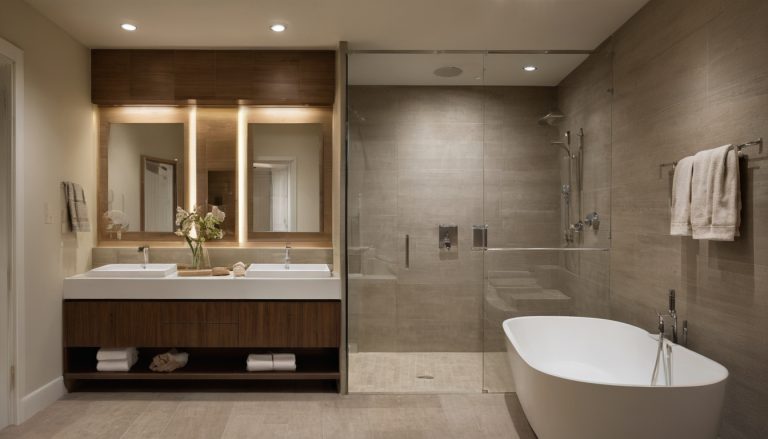
Choose tile first and a small bathroom can become a finished room where the door cannot clear, the vanity cannot open, or the shower cannot drain cleanly. The better sequence is measurement, fixed services, clearances, door operation, wet-zone control, wall depth, then finishes.
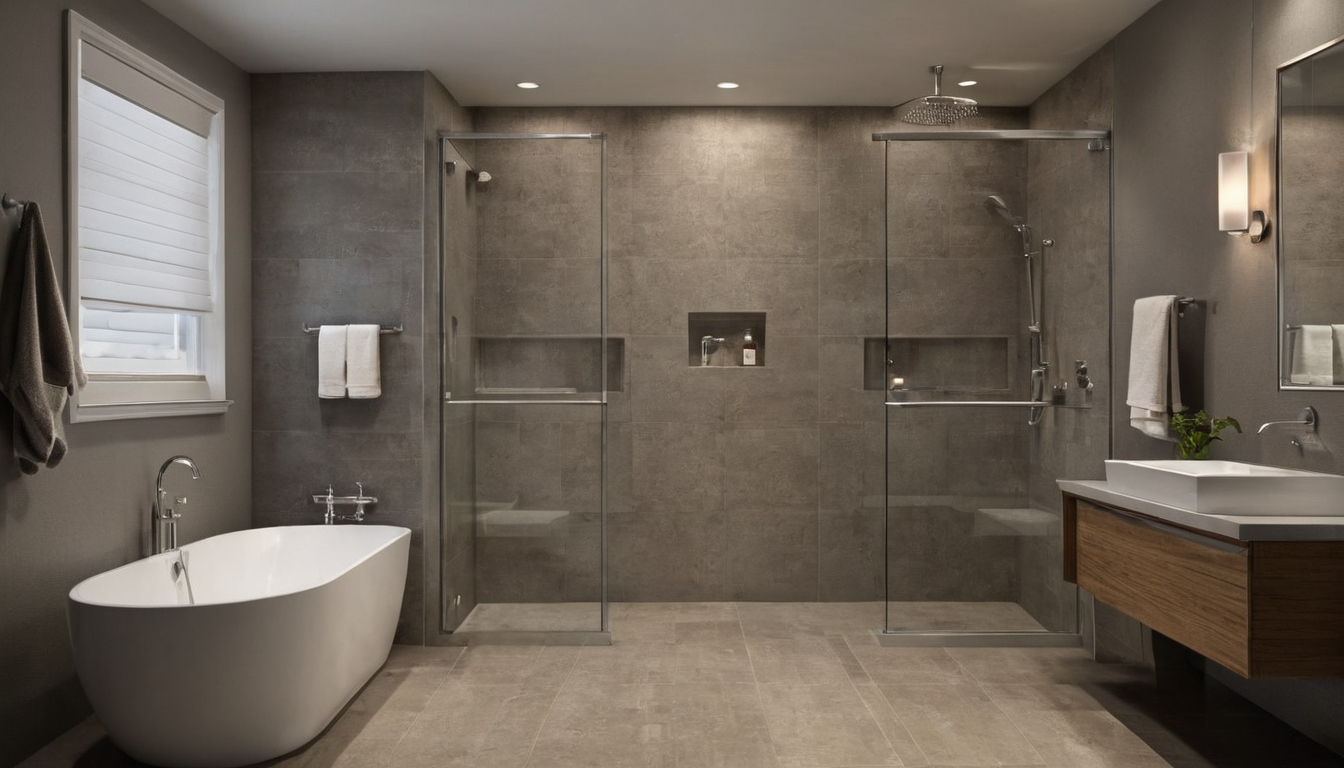
Small Bathroom Layout Decisions: Clearances, Door Swings, Niches, and Wet-Zone Limits shown as a planning reference for layout, scale, and material decisions.
Small bathroom ideas should start with the fixed layout constraints, not the tile or vanity style
Small bathroom ideas should begin with the finished room envelope, drains, door path, and service walls because those constraints decide which fixtures can fit before style is relevant. Local building, plumbing, waterproofing, strata, rental, and accessibility rules override general planning dimensions, so treat the measured plan as the controlling document.
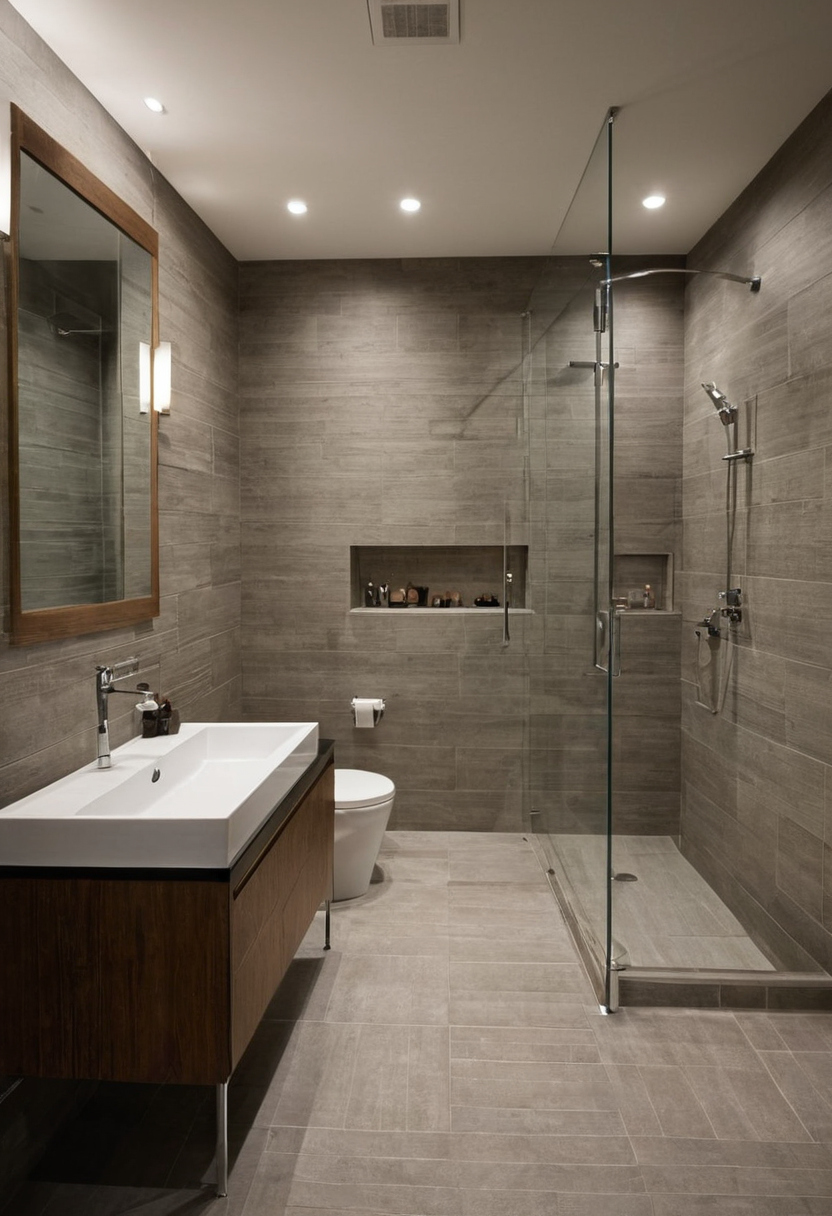
Small bathroom ideas should start with the fixed layout constraints, not the tile or vanity style shown as a planning reference for layout, scale, and material decisions.
The most useful bathroom remodel design drawing is not a mood board. It is a scaled plan showing finished wall faces, soil pipe position, basin waste, shower drain, door arc, window sill height, radiator or towel rail location, wall build-ups, and tile thickness. This is where practical interior design planning principles matter more than a decorative sample tray.
| Fixture or zone | Minimum check | Common conflict | Decision before ordering |
|---|---|---|---|
| Room shell | Finished length, width, ceiling height, diagonals | Rough dimensions shrink after finishes | Confirm finished dimensions |
| Door | Clear opening, swing radius, handle projection | Inward swing steals circulation | Keep, reverse, slide, or pocket the door |
| Toilet | Soil pipe, centerline, projection, seat height | Waste line is costly to move | Select close-coupled, back-to-wall, or wall-hung |
| Vanity and basin | Wall length, waste, feeds, drawer swing | Drawer hits door trim or toilet pan | Confirm depth, trap, and storage type |
| Shower | Drain, floor fall, screen line, threshold | Open shower wets dry fixtures | Choose tray, wet-room floor, screen, or enclosure |
| Walls and niches | Stud depth, pipes, vents, electrics | Niche collides with pipework | Decide recesses before rough-in |
What dimensions should be measured before choosing bathroom fixtures?
Measure the room after allowing for finish build-up, not only after demolition. Tile backer board, waterproofing membrane, adhesive, tile, wall correction, trims, and skirting can remove roughly 1/2 inch to 1 inch per tiled wall face. A 36-inch vanity bought for a 36-inch rough recess may not fit once the wall is squared and tiled.
Record floor level changes, sill height, ceiling height, existing wall thickness, service chases, and every obstruction. Mark the toilet centerline, soil pipe, basin waste, hot and cold feeds, shower drain, vent routes, electrical points, and structural elements. Measure diagonals because out-of-square rooms turn tight sanitaryware into site alterations.
Accessibility references help explain generous clearances, but they are not ordinary private bathroom minimums unless the project is within that scope. The U.S. Access Board describes the ADA Accessibility Standards as standards for covered public, commercial, and government facilities. The U.S. Department of Justice 2010 standards specify a 30 by 48 inch clear floor or ground space for wheelchair positioning. If a compact home bathroom must support accessible use, those dimensions change the layout, not just the fixture list.
When is keeping the existing toilet and shower position the better small bathroom remodel design decision?
Keeping the toilet and shower near their existing positions is often better when budget, schedule, concrete slabs, shared apartment services, floor joists, or approvals restrict the work. A basin waste is usually easier to adjust than a toilet waste because the toilet needs a larger soil pipe, fall, venting, and a viable route through floor or wall construction.
Moving a shower drain can trigger floor build-up, waterproofing redesign, new falls, and threshold changes. Before shopping, decide whether the project is a fixture replacement inside existing service points or a true layout change with plumbing, waterproofing, and approvals.
Bathroom fixture clearances decide whether a small bathroom layout is comfortable or merely possible
Clearances around the toilet, basin, shower entry, drawers, and door path decide whether a small bathroom works in daily use. A plan can look acceptable at minimum dimensions, yet still feel cramped, collect grime, or block access once handles, screens, towel rails, and finished wall thickness are included.
What is the minimum clearance around a toilet in a small bathroom?
Toilet planning starts from the centerline. A common residential planning minimum is about 15 inches from the toilet centerline to each side wall, vanity, shower screen, or adjacent fixture; 18 inches or more feels less cramped. In front of the toilet, many compact layouts need at least 21 inches clear from the bowl to the opposite obstruction, while 24 to 30 inches is more workable where the room allows.
Toilet projection can decide the room. A close-coupled toilet often projects about 26 to 30 inches from the finished wall. Compact back-to-wall pans can reduce projection slightly. Wall-hung pans improve floor visibility and cleaning, but they do not create large depth savings unless the frame can sit within a service wall.
How much space does a compact vanity or basin really need?
Vanity depth is usually the second pinch point. A standard vanity may be 18 to 21 inches deep, a compact wall-hung vanity often sits around 14 to 18 inches deep, and a cloakroom basin can be shallower. The trade-off is splash control, storage volume, counter space, and whether the user can stand at the basin without crowding the toilet or shower entry.
- Use a full-depth vanity only if the standing zone remains comfortable.
- Use a shallow vanity when the path between door, toilet, and shower needs protection.
- Check drawers and handles against the toilet pan, door trim, radiator, bath panel, and shower glass.
- Use a wall-hung basin when visible floor area and cleaning access matter more than enclosed storage.
Finish selection also affects tight rooms. The U.S. Environmental Protection Agency identifies paints, varnishes, waxes, cleaning products, building materials, and furnishings as common indoor sources of volatile organic compounds, so ventilation and product selection belong in planning.
What clearance is needed between a shower and a toilet?
Shower-to-toilet clearance depends on the enclosure. A fixed glass panel needs a cleanable gap and enough side room at the toilet. A hinged screen needs its full swing arc. A sliding screen saves swing space but adds tracks. A curtain is forgiving, but it can cling to the user if the tray is too narrow.
A walk-in opening often needs about 22 inches or more for comfortable entry, but splash control may require more glass, a better drain position, or a full enclosure. Local building, plumbing, waterproofing, rental, guest-bath, and accessibility rules override general planning dimensions.
Door swings often control the best bathroom redo ideas in very small rooms
Door operation can waste more usable space than the sanitaryware in a very small bathroom. Inward swing, outward swing, pocket door, surface slider, bifold door, or a re-hung hinged door should be judged by safety, privacy, code compliance, wall cavity space, service conflicts, and collision risk.
Is an inward-swinging bathroom door a layout problem in a small bathroom?
An inward-swinging door becomes a layout problem when the leaf crosses the toilet knee zone, blocks vanity drawers, hits a towel warmer, traps a bath mat, or prevents a shower screen from opening. A 28-inch or 30-inch door slab can need a similar swing radius inside the room, while the clear opening is usually less than the slab width after stops, hinges, and trim.
- Collision risk: reject the swing if the door hits the WC, vanity, shower glass, towel rail, cabinet, or drawer handle.
- Emergency risk: reconsider the swing if a fallen user could block access from the hallway.
- Accessibility risk: doors should not consume the only clear floor area.
- Hallway risk: an outward swing must not hit another door, corridor user, or privacy zone.
The 1991 ADA Standards page lists technical bathroom topics including doors, water closets, lavatories, bathtubs, shower stalls, toilet rooms, bathrooms, and sinks. Those public-accessibility references are not a substitute for local residential rules, but they show why door operation is a real planning issue.
When does a pocket door work better than a hinged door in a small bathroom?
A pocket door works better when the wall can accept the cassette and does not need the same cavity for plumbing, electrical boxes, towel warmers, recessed cabinets, or shower niches. The pocket usually needs a long uninterrupted wall zone, often roughly twice the door width plus framing allowances.
Pocket doors remove floor-swing conflicts but add service and privacy compromises. The wall can lose stiffness, sound control is usually weaker than a solid hinged door, and future roller or track repairs can be harder. Surface sliders avoid the cavity problem but leave edge gaps and need clear wall beside the opening.
Wet-zone limits determine whether a small bathroom can use an open shower, screen, or full enclosure
The wet zone should be defined by spray reach, floor fall, waterproofing continuity, screen height, drain capacity, ventilation, and cleaning access. Open glass looks simple on a drawing, but a small bathroom needs the shower format that keeps water away from the toilet, vanity, door, and storage.
When is a walk-in shower realistic in a small bathroom?
A walk-in shower is realistic only when dry fixtures sit outside the spray path and the open entry can drain after every use. A fixed panel can fail if a handheld shower points toward the toilet, the shower rose faces the opening, or the user has no room to stand clear while turning on cold water.
Treat an open shower as a splash-control decision first. If the shower head is high pressure, ceiling mounted, angled toward the room, or paired with a handheld hose, a hinged door, sliding enclosure, curtain, or higher curb may work better than a half-open wet-room layout.
How do floor falls and thresholds affect a small wet-room bathroom?
A wet-room finish depends on substrate geometry. The floor needs consistent fall to the drain, and waterproofing must continue through corners, wall junctions, penetrations, niches, and level changes. Large-format floor tile can fight a point-drain fall, while mosaics or smaller cuts often follow slope changes more easily.
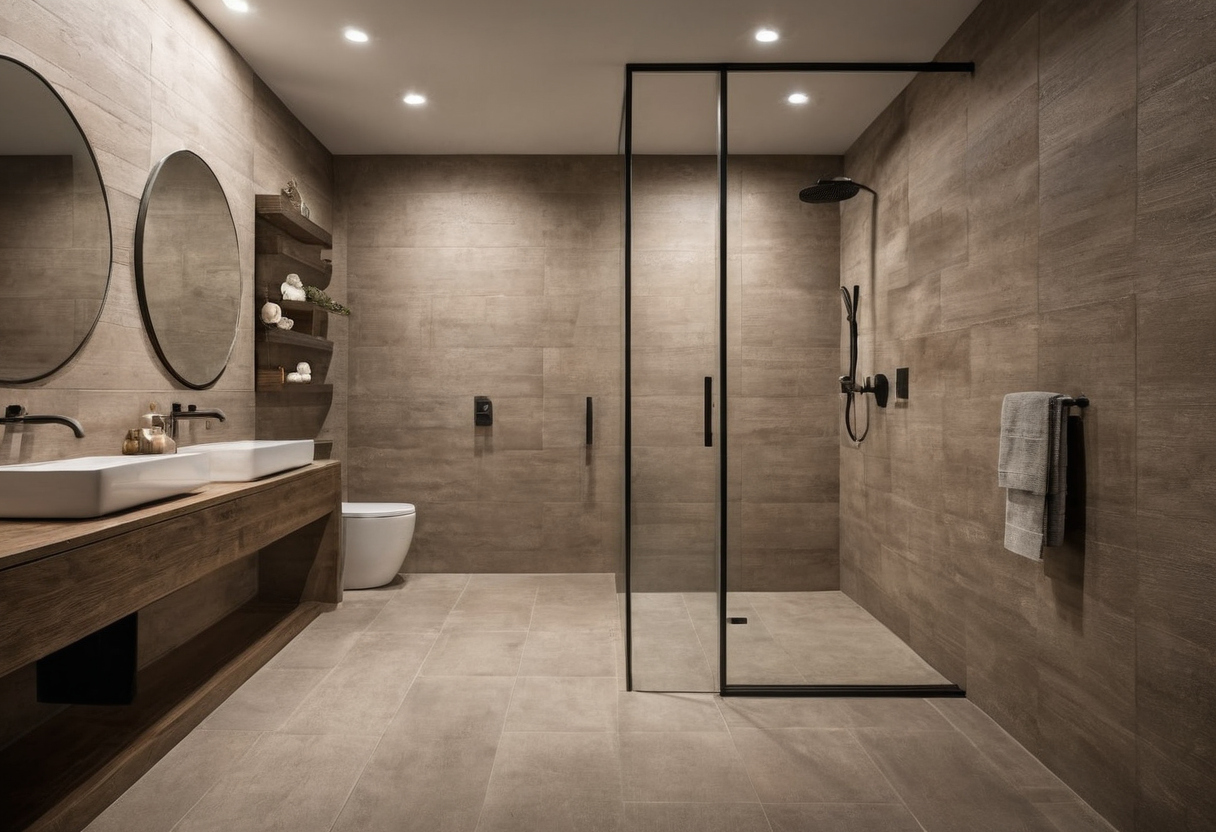
Wet-zone limits determine whether a small bathroom can use an open shower, screen, or full enclosure shown as a planning reference for layout, scale, and material decisions.
Concrete slabs, timber joists, waste-pipe routes, and door sill height decide whether the shower floor can be lowered, whether a linear drain has enough depth, and whether a threshold is needed. The EPA also recommends increasing ventilation when using products that emit volatile organic compounds indoors, which matters during waterproofing, sealing, painting, and cleaning.
What maintenance risks come from tight shower glass gaps?
Tight glass gaps create maintenance problems even when the layout fits. A narrow slot between a fixed panel and vanity can trap soap residue, hard-water marks, and failed silicone where a hand or squeegee cannot reach. Channel-set glass hides grime at the base, while sliding tracks add more edges than a simple fixed or hinged screen.
The practical lesson is simple: glass, spray, and toilet placement should not block controls that someone needs to reach quickly.
Recessed niches, concealed cisterns, and wall-hung fixtures need wall depth and service access
Recessed storage and concealed sanitaryware should be confirmed before rough-in because they need depth, structure, waterproofing continuity, pipe routes, and service access. A niche or concealed cistern drawn into the wrong wall can create more risk than storage.
Can every shower wall take a recessed niche?
A shower niche works only where the wall has safe depth and no critical services. A stud wall may offer roughly 90 mm of cavity before boards and tile reduce the usable depth. Masonry needs enough thickness to chase without weakening the wall. Exterior walls can raise insulation and condensation issues, party walls may have acoustic or legal limits, and plumbing walls often contain the pipes the niche would hit.
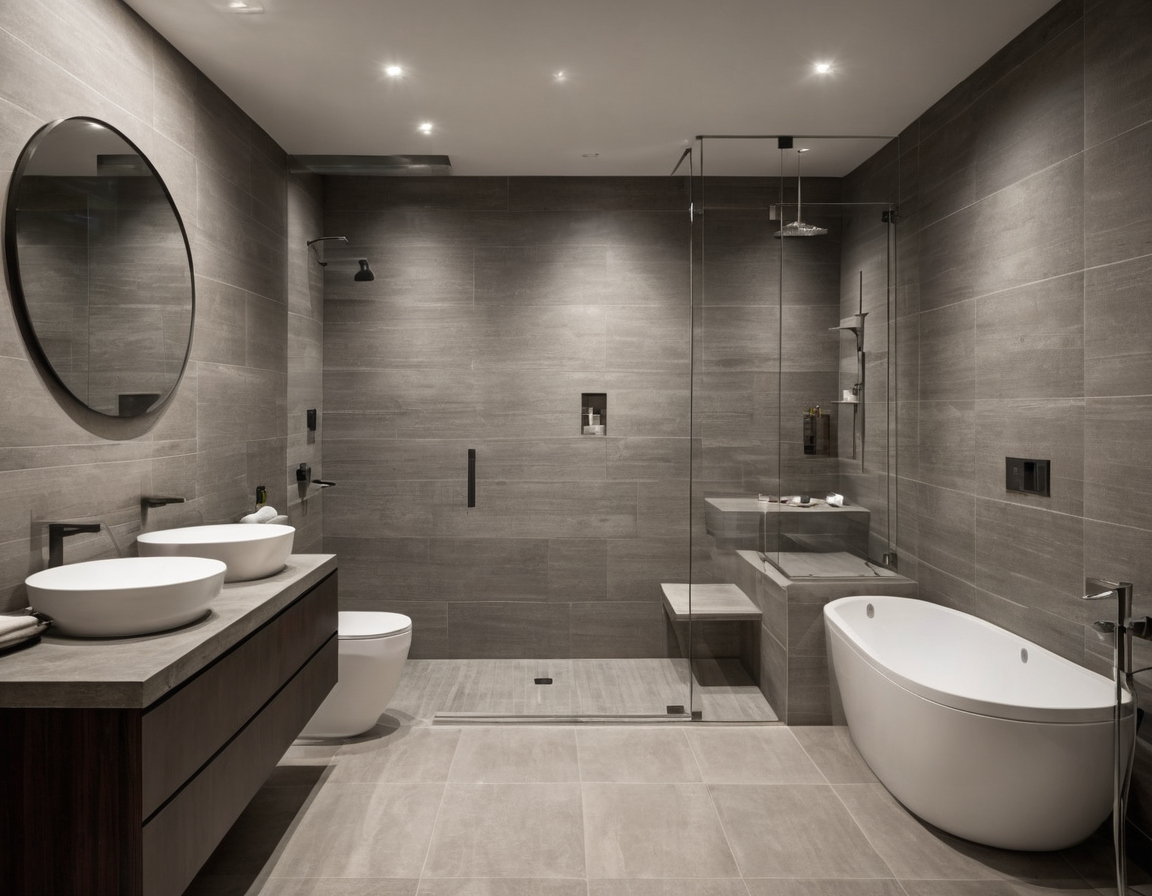
Recessed niches, concealed cisterns, and wall-hung fixtures need wall depth and service access shown as an editorial reference for proportion and finish coordination.
Waterproofing controls the final detail. The niche needs continuous membrane, sealed internal corners, a slight fall on the shelf, compatible backer board, and tile trims or mitred edges that do not puncture the waterproof layer.
When is a wall-hung toilet worth the extra build-up in a small bathroom?
A wall-hung toilet is worth considering when the cleaner floor line, easier mopping, and adjustable pan height justify the service wall. The concealed frame and cistern usually need a framed build-up of about 120 mm to 200 mm, depending on the system, wall structure, outlet, and flush plate.
The space saving can be visual rather than dimensional. A close-coupled toilet projects as one unit, a back-to-wall pan hides the cistern in furniture or a duct, and a wall-hung pan still needs a load-bearing frame. Flush plates usually provide cistern access, but valves, joints, and concealed connections must remain serviceable.
What storage works when recessed niches are not possible?
Surface-mounted storage is often safer than cutting the wrong wall. A mirrored cabinet about 100 mm to 150 mm deep, a shallow ledge above cistern boxing, or a slim cabinet outside the direct spray zone can add storage without disturbing waterproofing. Fixings should connect to structure or suitable masonry plugs, not only tile and board.
Tile format, storage, and lighting should follow the confirmed small bathroom layout
Finishes should refine the confirmed layout, not rescue a poor one. After fixture positions, door movement, wet-zone boundaries, and wall build-ups are fixed, tile size, grout layout, mirror height, lighting, towel storage, and procurement timing can reduce clutter and maintenance work.
Which tile decisions affect maintenance in a small bathroom?
Floor tile should suit wet use, cleanability, and the planned fall. Small mosaics give a sloped shower floor more grip and easier shaping around a point drain, but they create more grout joints. Large-format tile reduces grout on main walls and dry floors, yet it can force awkward cuts on a four-way shower fall unless the drain and slope are designed for it.
Grout and silicone matter more in compact bathrooms because every joint sits close to splash, steam, or cleaning products. Epoxy grout can reduce staining in wet areas, while cementitious grout needs sealing and maintenance. The U.S. Environmental Protection Agency mold and moisture guide advises fixing condensation and wet or damp spots promptly, so poor falls, failed silicone, and trapped water should be treated as layout defects.
What should be ordered before the bathroom rough-in starts?
Procurement should lock the parts that affect plumbing, electrics, waterproofing, and tile edges before the trades open the walls.
- Confirm toilet projection, waste position, cistern type, and seat height.
- Confirm vanity width, depth, basin waste, tap position, drawer swing, and mirror cabinet depth.
- Confirm shower valve depth, outlet heights, tray or drain model, screen size, and niche dimensions.
- Confirm tile thickness, trim finish, floor waste grate, towel rail, robe hooks, and lighting locations.
- Get installer sign-off on rough-in, falls, waterproofing penetrations, and tile set-out before tiling starts.
Lighting should be planned after the mirror, shower screen, and storage are fixed. Use mirror task lighting, ceiling lighting that avoids face shadows, and damp or wet-location fittings where electrical rules require them. ENERGY STAR says qualified LED lighting uses at least 75 percent less energy and lasts up to 25 times longer than incandescent lighting; compare broader modern home lighting options when selecting fixture types.
Order dimension-setting parts before rough-in, then check falls, silicone, fixture alignment, and access panels against common handover defects to check before accepting finished work.
FAQ
What is the golden rule for small bathroom layouts?
Resolve fixed constraints before choosing finishes: finished dimensions, drains, soil pipe, door operation, wet-zone limits, wall depth, and service access.
Is a 5×5 bathroom too small for a toilet, basin, and shower?
A 5×5 bathroom can sometimes fit all three, but only with compact fixtures, careful door planning, controlled shower splash, and confirmed local rules. The finished dimensions and drain positions decide feasibility.
What is the minimum clearance between a shower and a toilet?
There is no single universal planning number for every home. Check local rules, then draw the toilet side clearance, shower entry, screen swing, cleanable glass gap, and splash path on the finished plan.
How much space is needed between a bathroom door and a toilet when the door swings inward?
The door should open without striking the toilet, blocking knee space, or trapping a user. Draw the real swing arc, including handle and stop positions, against the toilet projection and finished wall faces.
Is a recessed shower niche worth it in a very small bathroom?
A recessed niche is worth it only if the wall has depth, no conflicting services, and reliable waterproofing. If not, a shallow cabinet, ledge, or surface-mounted storage outside the direct spray zone is safer.